In the Sannio area, European funds make irrigation more efficient by saving water
The date of the European Youth Event (EYE), the big event promoted by the European Parliament and dedicated to young people aged between 16 and 30, is approaching. They are called upon to discuss Europe and make their own contribution in terms of vision and planning.
The biennial event, organised in Strasbourg since 2014, is coming to Italy for the first time this year: from 17 to 19 May, Forlì is expecting 4,000 young people from all over Europe and beyond, with a very rich programme of 200 free activities, workshops, laboratories, including artistic ones, debates, guided tours and sports tournaments proposed by 200 youth organisations that answered the call.
In the run-up to the European elections, the European Parliament is funding four national EYE editions this year, in two capitals, Berlin (Germany) and Vilnius (Lithuania), in Brežice (Slovenia), as well as in Forlì.
The Italian event is promoted by the University of Bologna, in cooperation with European institutions and EYE Forlì partners.
EU Factor Next will be present with a dedicated stand to inform participants about the project activities but, especially, to hear from the voices of young Europeans what hopes and priorities the Europe of the future should embody.
The stand will be animated by three European journalists from Spain, Croatia and the Netherlands, who will interview EYE participants at the Video Corner of EU Factor Next. Other interviews will be conducted at the Campus and broadcast to the public via TV, radio and live social media.
Eu Factor Next – for a cohesive, sustainable and fair Europe, is the project led by Legacoop Emilia-Romagna and its service company Innovacoop through the co-financing of the European Commission, which aims at communicating and disseminating the Cohesion Policy and the impact that European investments have on the lives of citizens, young people and enterprises not only in Italy, but in several Member States.
Clip of Cohesion #74 – We interview in Bologna the international partners of the European project SKI.F.T., an initiative aimed at small social economy enterprises to support them in their green transition
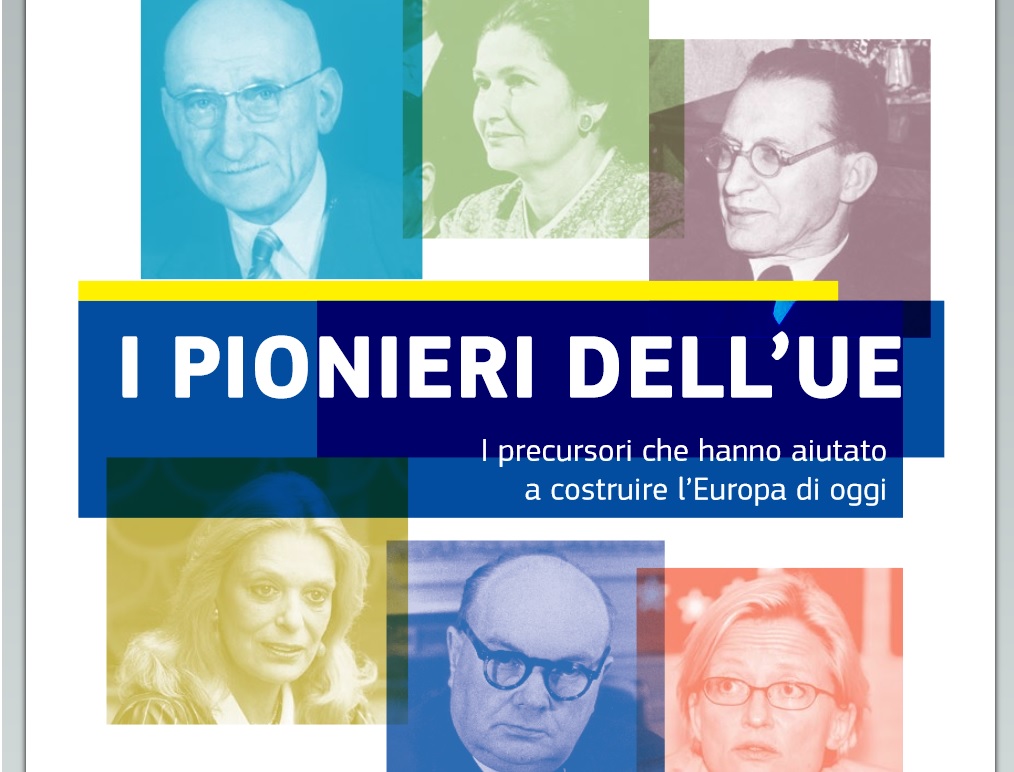
A very interesting publication (downloadable free of charge, in several languages, from this page) discovering women and men who contributed vision and commitment to the birth of the European spirit.
Resistance fighters, Holocaust survivors, political figures and even a film star: the visionary leaders described in this booklet inspired the creation of the Europe we live in today.
They were a diverse group of people moved by the same ideals: peace, unity and prosperity in Europe. Many of them worked to bring an end to conflict in Europe after the horrors of the two world wars and to promote peace and solidarity between peoples, acting as champions of the fundamental values on which the EU is founded: freedom, democracy and equality; respect for human dignity, human rights and the rule of law; solidarity and protection of all members of society.
The aim of this booklet is to testify to the importance that the contributions of these personalities have had for the foundations of the EU. The pioneers of the EU worked for peace and prosperity and for the elimination of social exclusion and discrimination. They helped bring about the systems that led to economic stability and eventually to a single currency, and promoted Europe’s rich cultural heritage. Without their drive and imagination, we would not be living today in the peaceful and stable Europe we know.
These short biographies are an excerpt from the full articles available online at: https://european-union.europa.eu/principles-countries-history/history-eu/eu-pioneers_it
Clip of Cohesion #70 – Let’s discover the project for the new university campus in Aosta, which meets several EU objectives, namely to be a green, smart and above all inclusive building
Since 2013, the EU has been promoting tools to support NEETs, in particular to foster their integration into training and vocational pathways. Following the Covid-19 pandemic, which worsened the conditions and numbers of young people in fragile situations, the EU set new targets to reduce the number of NEETs by 2030. The Emilia-Romagna Region has acknowledged these guidelines and also thanks to European funding has launched local projects and initiatives to respond in a concrete and effective way to the needs of NEETs in Emilia-Romagna.
To continue reading, click on the following link: https://regioneer.it/vv446e1v
Edited by Europe Direct Emilia-Romagna
Interview with the mayor of Tollo, in the province of Chieti, on the Borghi Ospitali project
The Capital’s Fourth Municipality invests in schools and territory with European funds
Clip of Cohesion #65 – At the event organised by Europe Direct Emilia-Romagna held on 22 February at the Sala Borsa in Bologna, the new European perspectives of the social economy were discussed with leading representatives of the sector
The European Commission has recently launched a new interactive guide to available EU funding opportunities for rural areas: it is called Rural Toolkit.
It brings together funding opportunities from 26 different EU funds, ranging from the Common Agricultural Policy (CAP) and Cohesion funds to Horizon Europe and the Recovery and Resilience Plan. The guide offers machine translations in all EU languages.
Rural toolkit aims to make it easier for local institutions, businesses, associations and individuals in rural areas to navigate the different EU funding and support options.
The toolkit provides a single access point to all existing initiatives, with comprehensive information on available resources, and explains why these are relevant for rural areas.
Practical examples presented on the platform encourage knowledge sharing and peer learning among rural communities. The Get inspired section provides information on successful initiatives implemented in rural areas across the EU and how to effectively combine EU funds to maximise their impact and address specific local needs.
Within the kit, users will also find a range of valuable resources, including handbooks and guidance on EU funding opportunities.