Smart

A cybersecurity project also financed with European funds to protect public authorities

At a time in which the challenges of our society call for interdisciplinary approaches, the fusion of knowledge from different subjects becomes essential to overcome today’s complexities. The ‘Biobits’ project is an exemplary result of this synergy and of the European commitment to research and the development of innovative solutions.

The heart of this project, conceived by the University of Turin in collaboration with the University of Eastern Piedmont, beats in unison between biology and technology.

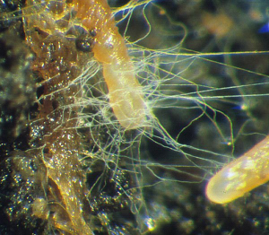
The focus of ‘Biobits’ is on agriculture, specifically on the analysis of vesicular-arbuscular mycorrhizae, fungi characterised by their symbiotic relationship with plants. The two universities explored the use of enzymes and proteins derived from such analyses in the industrial context to identify less polluting substances and tools.

The result? Find out by listening to the ‘EU with YOU’ podcast:
https://podcast.areanews24.it/podcast/areanews-eufactor.htm

“EU with YOU” is the Eu Factor Next podcast realised by Raduni, the Association of Italian University Radio Operators, to tell citizens at first hand how European funding is spent. In each episode the podcast will tell the story of a project funded by the European Union and its Cohesion Policy on the national territory.

‘Torno Subito’ finances internships or apprenticeships outside the region, for the job placement of young people

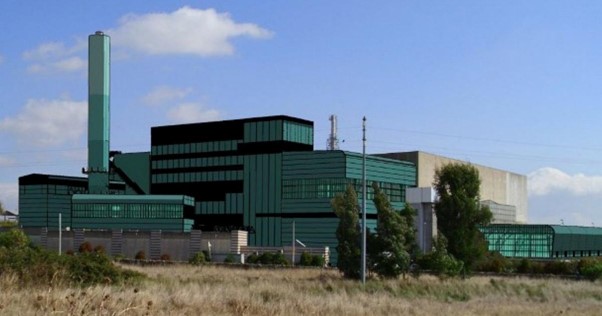
In the new episode of ‘EU with YOU’ we talk about a green project in Sardinia, to modernise the area’s incinerator, promoting energy sustainability.

A waste-to-energy plant is a particular type of incinerator, which uses the combustion of so-called Municipal Solid Waste, i.e. non-recyclable waste from households. The term ‘revamping’, on the other hand, actually means ‘modernisation process’, which takes place by means of a refurbishment of the plants.

The waste-to-energy plant in question is located in the Zona Industriale Tossilo, in the Province of Nuoro, more precisely in Macomer. The modernisation operations will be carried out by the Padua-based company Area Impianti S.P.A., with the contribution of EUR 42 million allocated, which will also come from European funds, such as: the Cohesion and Development Fund, which in turn is part of the 2014-2020 Action and Cohesion Plan (CAP), but also from the Sardinia Region.

The project was launched on 20 June 2016. But at what stage is its revamping process?

Find out more about this project with “EU with YOU”: https://podcast.areanews24.it/podcast/areanews-eufactor.htm

“EU with YOU” is the Eu Factor Next podcast produced by Raduni, the Association of Italian University Radio Operators, to tell citizens first-hand how European funding is spent. In each episode the podcast will tell the story of a project funded by the European Union and its Cohesion Policy on the national territory.

Clip of Cohesion #60 – The EU mainly finances projects it approves in two different ways: through a top-down or a bottom-up approach. What is the preferred strategy of projects?

The development of nanophotonics and nanotechnology will play a key role in the fight against cancer and neurological diseases.

The numbers of cancer patients in Italy are growing. Last year’s figures, compiled by the report ‘The Numbers of Cancer 2022’, speak of 391,000 new diagnoses, 14,000 more cases than the previous year, affecting more men.

The European Union is very committed from the point of view of funding and development policies, especially in the field of health: the project ‘Nanophotonics for new diagnostic and therapeutic approaches in oncology and neurology’, planned by the Ministry of Health and Research, aims to be able to produce cutting-edge technologies, in this case ‘nano-technologies’ that can be used in multiple fields.

This term refers to all those electronic materials 10,000 to 1,000,000 times smaller than a millimetre. Nanophotonics technology has many uses and advantages, including early intervention and dynamic detection of complex diseases or problems.

But how can these diseases be detected in advance?

Find out more with ‘EU with YOU’: https://podcast.areanews24.it/podcast/areanews-eufactor.htm

“EU with YOU” is the Eu Factor Next podcast realised by Raduni, the Association of Italian University Radio Operators, to tell citizens at first hand how European funding is spent. In each episode the podcast will tell the story of a project funded by the European Union and its Cohesion Policy on the national territory.

Clip of Cohesion #59 – The Sardinia Radio Telescope is a very smart project funded by the European Union. In addition, many other projects around the EU and the CLIC competition of the Emilia-Romagna Region

Sardinia Radio Telescope, an increasingly advanced research tool

The European Youth Week is an event organised every two years by the European Commission to celebrate and promote the engagement, participation and active citizenship of young people across Europe and beyond.

The European Youth Week 2024, scheduled from 12 to 19 April, will take place two months before the European elections, which are scheduled to take place between 6 and 9 June 2024. This means that democracy and the European elections will both be at the centre of the debate. For young people in Europe, this is an important opportunity to participate more actively in society and put democracy into action.

For more information, interested young people can contact the national agencies for Erasmus+, the European Solidarity Corps and the Eurodesk network.

The Commission also presented several concrete initiatives to address the concerns of young people in five policy areas that are of key importance to them: health and well-being, environment and climate, education and training, international cooperation and European values, employment and inclusion. As part of these measures, for example, the Commission:

  • will take forward work towards a Joint European Diploma in 2024, in line with the European Strategy for Universities;
  • will set up a platform for regular dialogue and consultations with youth organisations from all over the world through the Platform for Dialogue with Young People in EU External Action;
  • will update its quality framework for traineeships in 2024 to address issues such as fair pay and access to social protection;
  • will develop guidelines on well-being in schools, due to be published in 2024;
  • will target young people with the upcoming climate and democracy campaign ahead of the European elections in 2024;
  • will increase volunteering opportunities for young people to address the green transition, complementing the 2024 call for the European Solidarity Corps under Horizon Europe;
  • will further implement the ALMA (Aspire, Learn, Achieve) initiative to help disadvantaged young people aged between 18 and 29 to integrate into society and the labour market through a vocational learning experience abroad.

The European Youth Portal: https://youth.europa.eu/home_it

European Youth Week: https://youth.europa.eu/youthweek_it

In Caserta, after decades of neglect, the Bourbon complex is once again available to the public