Citizens

In this episode of the UnicaRadio Podcast, some points of the ‘Antica Kroton’ project are presented. The project is part of the 2014-2020 Action and Cohesion Plan (CAP), a fund created in 2011 to speed up the arrival of European funds, and also to monitor the effectiveness of interventions.

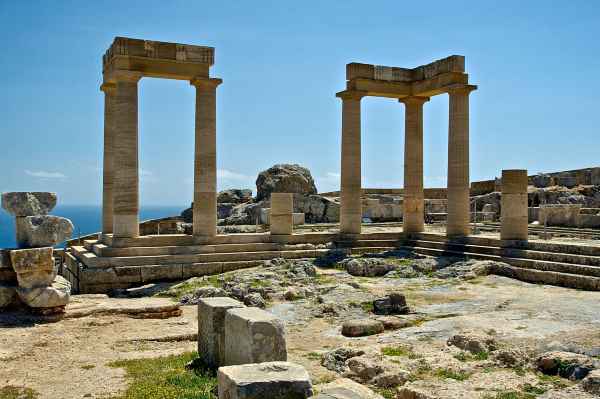
The main aim of the project, as its name suggests, is to enhance the areas involved, in particular: the Urban Archaeological Area, for the recovery of the excavations in the city centre; the Stadium Area – Pignera Park, with the intention of musealising the entire park area; and the redevelopment of the ‘Ex Ariston’ area.

These areas, considered to be an ‘urban void’, have not been touched by the construction because there have been archaeological discoveries. The intervention, targeted only at the areas owned by the municipality, aims to exploit this urban void and restore beauty to the entire ancient area of the city of Crotone.

Listen to the “Eu with You” podcst for further updates on the Calabrian project: https://podcast.areanews24.it/podcast/areanews-eufactor.htm

“EU with YOU” is the Eu Factor Next podcast realised by Raduni, the Association of Italian University Radio Operators, to tell citizens first-hand how European funding is spent. In each episode the podcast will tell the story of a project financed by the European Union and its Cohesion Policy on the national territory.

Clip of Cohesion #64 – Let’s discover the initiatives organised by Europe Direct Lombardia for young students who will vote for the first time in the next European elections

Clip of Cohesion #63 – Ecological transition and climate change are key issues across the EU. This was discussed at the series of meetings approaching the European elections organised by Europe Direct Emilia-Romagna in Bologna

WBO Italcable in Campania reborn thanks to workers’ co-op and European funds

The European Solidarity Corps helps young people from 18 to 30 years old to participate in projects that benefit communities, both abroad and in their own country. These projects offer a stimulating experience of growth and knowledge.

You can choose from different options such as volunteering, internships, working, participating in local solidarity projects and volunteering in humanitarian aid. Activities cover a variety of areas: education and training, citizenship and democratic participation, environment and nature protection, migration, culture, humanitarian aid and others.

The European Solidarity Corps, managed by the European Commission, provides funding in the form of grants to organisations through calls for proposals. Young people wishing to get involved in such activities must register on the European Solidarity Corps portal. The portal is the place where young grant recipients and organisations can carry out activities and find each other.

As far as volunteering is concerned, projects offer the opportunity to learn new skills, spend time abroad, learn a language and meet many people to share meaningful experiences. You can choose between individual and group volunteering.

Individual volunteering

  • can last from 2 to 12 months
  • is full-time (between 30 and 38 hours per week)
  • allows you to contribute to the daily work of an organisation that directly benefits the local community
  • it is usually cross-border, i.e. it takes place in a country other than the one where you live (although national volunteering projects do exist)
  • in some cases you can also participate for a shorter period (2 weeks to 2 months)

Supporting and host organisations
If a foreign destination is chosen for individual volunteering, two organisations are involved:

  • the supporting organisation, which is based in your home country and helps with the preparation of the experience abroad
  • the host organisation, which welcomes and mentors volunteers in the destination country.

Supporting organisations can be found in the database of accredited/quality-labelled organisations.

Group volunteering

  • can last from 2 weeks to 2 months
  • is full-time (between 30 and 38 hours per week)
  • you volunteer with people from at least 2 different countries
  • the group will count between 10 and 40 volunteers and will include people with fewer opportunities
  • it is normally abroad, but can also take place in one’s own country.

More infos https://youth.europa.eu/solidarity/young-people/volunteering_it

Below are the links to the databases for consultation:

Database of accreditated organisations

EU-funded volunteering opportunities

Clip of Cohesion #61 – Today we talk about all those small but important EU-funded projects that operate on the border between different countries. Italy is particularly active in this regard.

Landfill mining as a practice to revalue brownfield sites and to enable the recovery of various materials.

In recent years, the world has witnessed several traumatic events that have affected our lives and some sectors of the economy. During these events, it has also been difficult to find many raw materials, which are now imported and depend on foreign countries.

This is why, since the 1990s, thought has been given to a way to overcome this critical situation. Several countries have now embraced the phenomenon of ‘landfill mining’ for years. Basically, it is a process of recovering materials and resources from landfills, which are recycled through specific treatment and machinery, with multiple implications for the environment and the use of renewable energy sources.

In particular, the EU financed a project in the province of Caserta, for which €24 million was allocated, and of which €15 million came from the ‘Development and Cohesion Fund’, the EU’s plan for the promotion of the environment and the development of transport infrastructure.

“Environmental recovery with new volume recovery through landfill mining applied in the disused landfills of Maruzzella 1 and 2 and San Tammaro” is the name of the project protagonist of the new episode of the podcast “EU with YOU”: https://podcast.areanews24.it/podcast/areanews-eufactor.htm

“EU with YOU” is Eu Factor Next’s podcast realised by Raduni, the Association of Italian University Radio Operators, to tell citizens at first hand how European funds are spent. In each episode the podcast will tell the story of a project funded by the European Union and its Cohesion Policy on the national territory.

In the heart of the Lucanian Dolomites a new botanical garden is born

The key European funds for rural development, explained by Joao Onofre, Head of DG AGRI

The European Youth Week is an event organised every two years by the European Commission to celebrate and promote the engagement, participation and active citizenship of young people across Europe and beyond.

The European Youth Week 2024, scheduled from 12 to 19 April, will take place two months before the European elections, which are scheduled to take place between 6 and 9 June 2024. This means that democracy and the European elections will both be at the centre of the debate. For young people in Europe, this is an important opportunity to participate more actively in society and put democracy into action.

For more information, interested young people can contact the national agencies for Erasmus+, the European Solidarity Corps and the Eurodesk network.

The Commission also presented several concrete initiatives to address the concerns of young people in five policy areas that are of key importance to them: health and well-being, environment and climate, education and training, international cooperation and European values, employment and inclusion. As part of these measures, for example, the Commission:

  • will take forward work towards a Joint European Diploma in 2024, in line with the European Strategy for Universities;
  • will set up a platform for regular dialogue and consultations with youth organisations from all over the world through the Platform for Dialogue with Young People in EU External Action;
  • will update its quality framework for traineeships in 2024 to address issues such as fair pay and access to social protection;
  • will develop guidelines on well-being in schools, due to be published in 2024;
  • will target young people with the upcoming climate and democracy campaign ahead of the European elections in 2024;
  • will increase volunteering opportunities for young people to address the green transition, complementing the 2024 call for the European Solidarity Corps under Horizon Europe;
  • will further implement the ALMA (Aspire, Learn, Achieve) initiative to help disadvantaged young people aged between 18 and 29 to integrate into society and the labour market through a vocational learning experience abroad.

The European Youth Portal: https://youth.europa.eu/home_it

European Youth Week: https://youth.europa.eu/youthweek_it